XR industry
Apple just acquired Sonera: how it plans to beat Meta in the AR glasses war
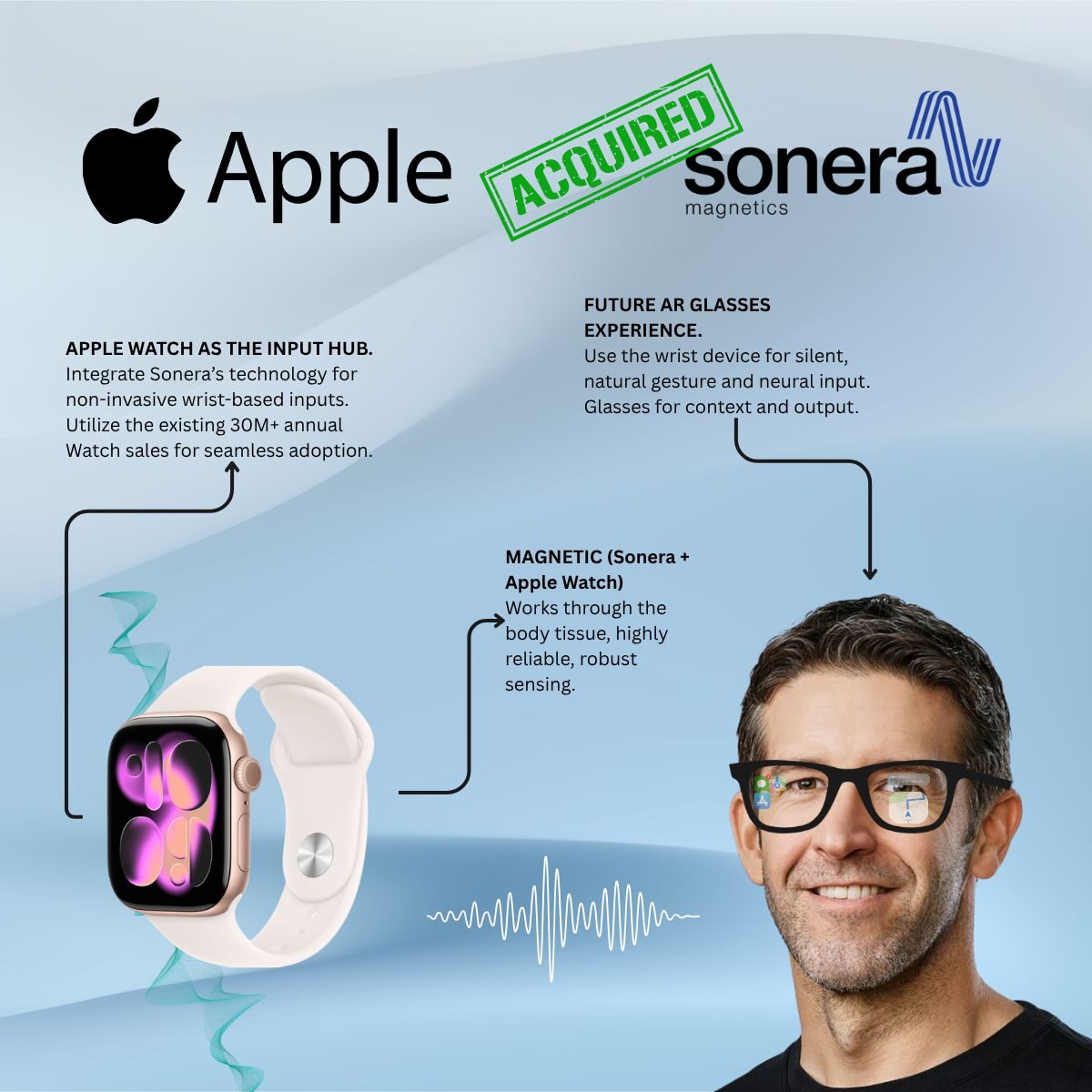
Apple just acquired magnetic-sensor company Sonera 🚨 And it reveals exactly how they plan to beat Meta in the AR glasses war 💰🕶️
For four years, the spatial computing world has obsessed over displays. But platforms don’t win on screens. They win on input breakthroughs:
- The PC won with the mouse.
- The smartphone won with tactile multitouch.
The winning input always makes the hardware feel like a natural extension of your body.
Current XR inputs (controllers, hand-tracking, eye-pinch) are great for your living room, but terrible for walking down the street or sitting on the subway.
Meta knew this. That’s why they built the Neural Wristband, using electrical sensors to read your wrist muscles and translate intention into action.
Why magnetic sensing gives Apple the high ground
Apple’s acquisition of Sonera is a direct strike at that exact strategy, but Apple has the high ground. Sonera specializes in magnetic sensing. Unlike electrical signals, magnetic fields pass through the body almost untouched, making the data far cleaner and more reliable.
More importantly? Apple doesn’t need to convince you to buy a new wristband. They just need to put this tech inside the 30M+ Apple Watches they already sell every year. 🤑
Your future setup: Apple glasses 🕶️ for output, an iPhone 📲 in your pocket for compute, and an Apple Watch ⌚️ on your wrist for silent, high-bandwidth neural input.
Right now, Apple is framing this as a “health” acquisition. But let’s be real. Health has ALWAYS been the Trojan horse for tech companies. They did the same thing last year by integrating Synchron’s brain-computer interface for paralyzed users under the banner of “accessibility.”
Meta is trying to invent a neural wristband from scratch. Apple already owns the wrist, and they are refusing to let Meta take it!
So what will people actually do with silent input? 📖
The first everyday use cases won’t be flashy demos. They’ll be the quiet habits people already have on their phones, and reading is one of the biggest.
Picture this: you’re on the subway with glasses on, a comic or novel floating in front of you, and you turn the page with a tiny flick of your wrist. No controller, no waving your hands in public.
Readality, a Montreal startup building a dedicated spatial reading platform for XR, is a good example of where this goes. Once input disappears, spatial reading stops being a “headset at home” activity and becomes something you do anywhere, all day. 🚇✨
More from the blog
-
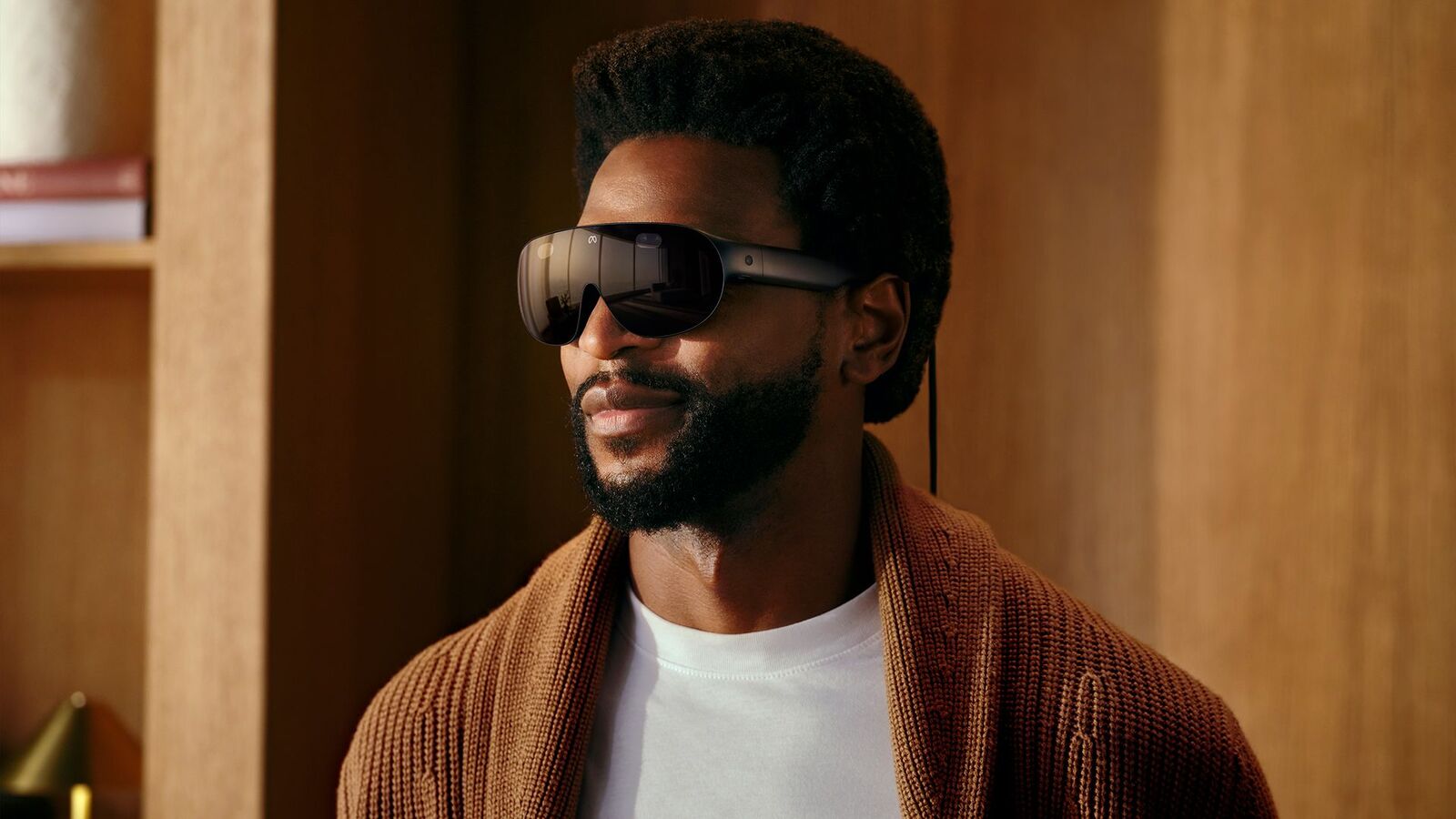
Meta VR Glasses: the first VR product where VR is optional
Meta’s VR Glasses make immersion one mode among many. Why headsets and AI glasses are converging, and why all-day wear makes reading a key use case.
Read the article → -

EssilorLuxottica x Lynx: why an eyewear giant bought a VR startup
EssilorLuxottica (Ray-Ban, Oakley) acquired French VR maker Lynx. What it says about who will own XR hardware, and why cross-device apps like reading win.
Read the article → -

Even Realities hit a $1B valuation with smart glasses that have no camera
Even Realities reached a $1B valuation with camera-free smart glasses. What you gain and lose without a camera, and why reading never needed one.
Read the article →