XR industry
Even Realities hit a $1B valuation with smart glasses that have no camera

Even Realities just hit a $1B valuation doing smart glasses WITHOUT CAMERAS. 🕶️🚫📷
Silicon Valley’s default assumption has been that smart glasses must be cameras on your face. Meta’s bet is simple: more video feed = more AI data.
The problem? An always-on face camera turns you into a walking GDPR violation, especially across Europe, where regulators in Norway, the UK and elsewhere are already considering banning smart glasses with cameras (TechCrunch, The Guardian).
Under GDPR and the EU AI Act, an always-on face camera is a massive legal liability. ⚖️
Here’s the interesting thing: the sci-fi stuff CAN be built without turning the user into a walking surveillance drone.
How you pull it off camera-free
- 3D displays: dual micro-OLED waveguides beam stereoscopic depth straight to your eyes, while basic motion sensors (IMUs) pin the interface in space as you turn your head.
- Hand tracking: mmWave radar or neural EMG wristbands read micro-gestures, letting you pinch, swipe and click with your hands literally inside your pockets.
So what do you actually lose without a camera?
Visual grounding and occlusion.
An EMG band and an IMU won’t let you ask your AI, “Look at this engine and tell me which bolt to unscrew.” And without a camera constantly 3D-mapping your living room, your digital windows won’t seamlessly hide behind your physical coffee table. The AI is hyper-aware, but fundamentally blind. 🙈
Reading never needed a camera
But here’s the thing: a lot of the most valuable daily use cases never needed a camera in the first place.
Take reading 📖. A book or comic floating in front of you, pages turned with a micro-gesture, on a train or in a café, with nobody around you wondering if they’re being filmed. That’s exactly the kind of experience Readality, a spatial reading platform for XR, is designed for. It needs depth, a stable interface and great text rendering, and no camera at all.
Camera-free glasses might lose the “AI that sees everything” demo, but they could win the habits people repeat every day, for hours.
Two completely different bets. Which one do you think wins mass adoption? 👇
More from the blog
-
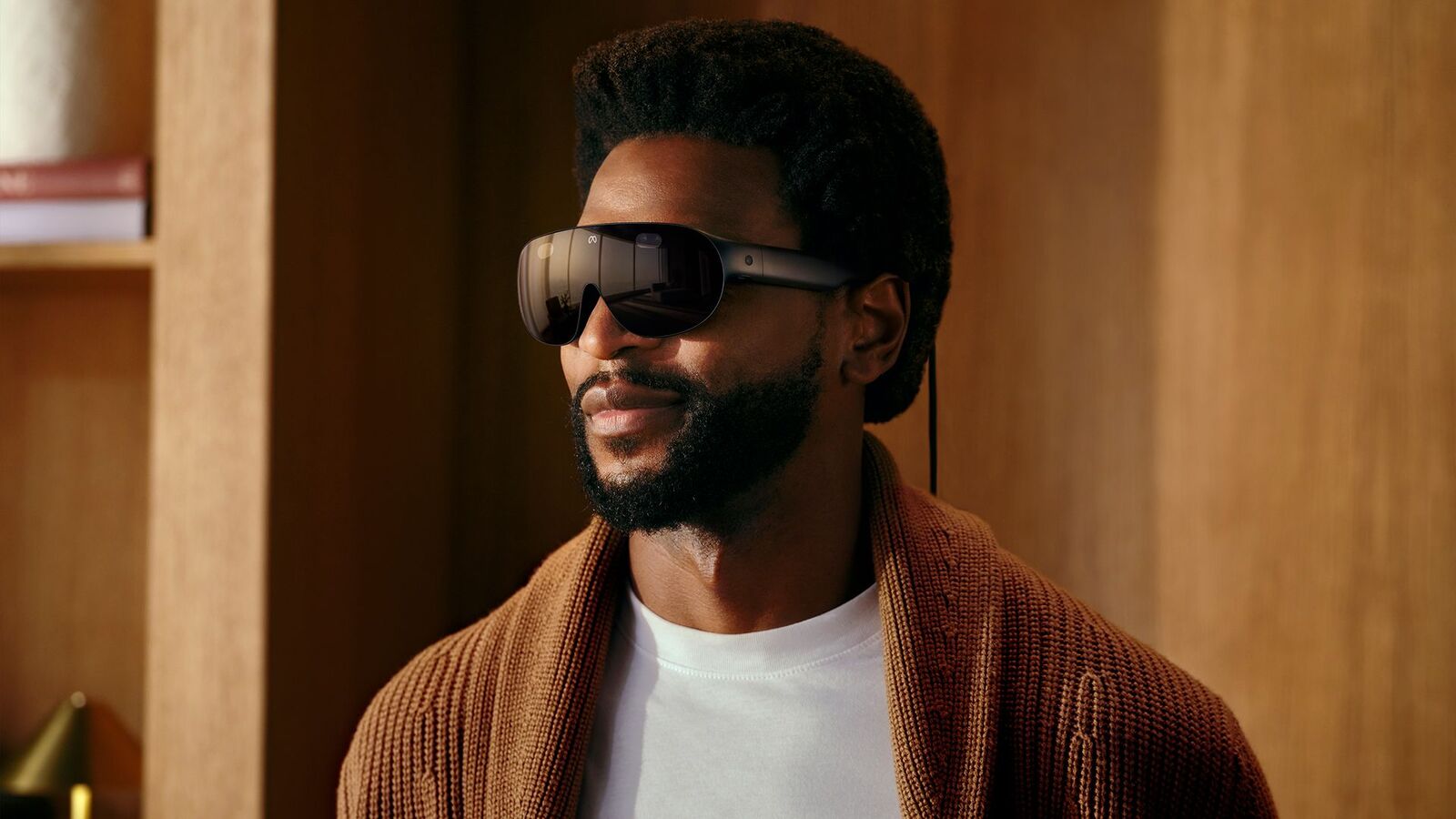
Meta VR Glasses: the first VR product where VR is optional
Meta’s VR Glasses make immersion one mode among many. Why headsets and AI glasses are converging, and why all-day wear makes reading a key use case.
Read the article → -

EssilorLuxottica x Lynx: why an eyewear giant bought a VR startup
EssilorLuxottica (Ray-Ban, Oakley) acquired French VR maker Lynx. What it says about who will own XR hardware, and why cross-device apps like reading win.
Read the article → -
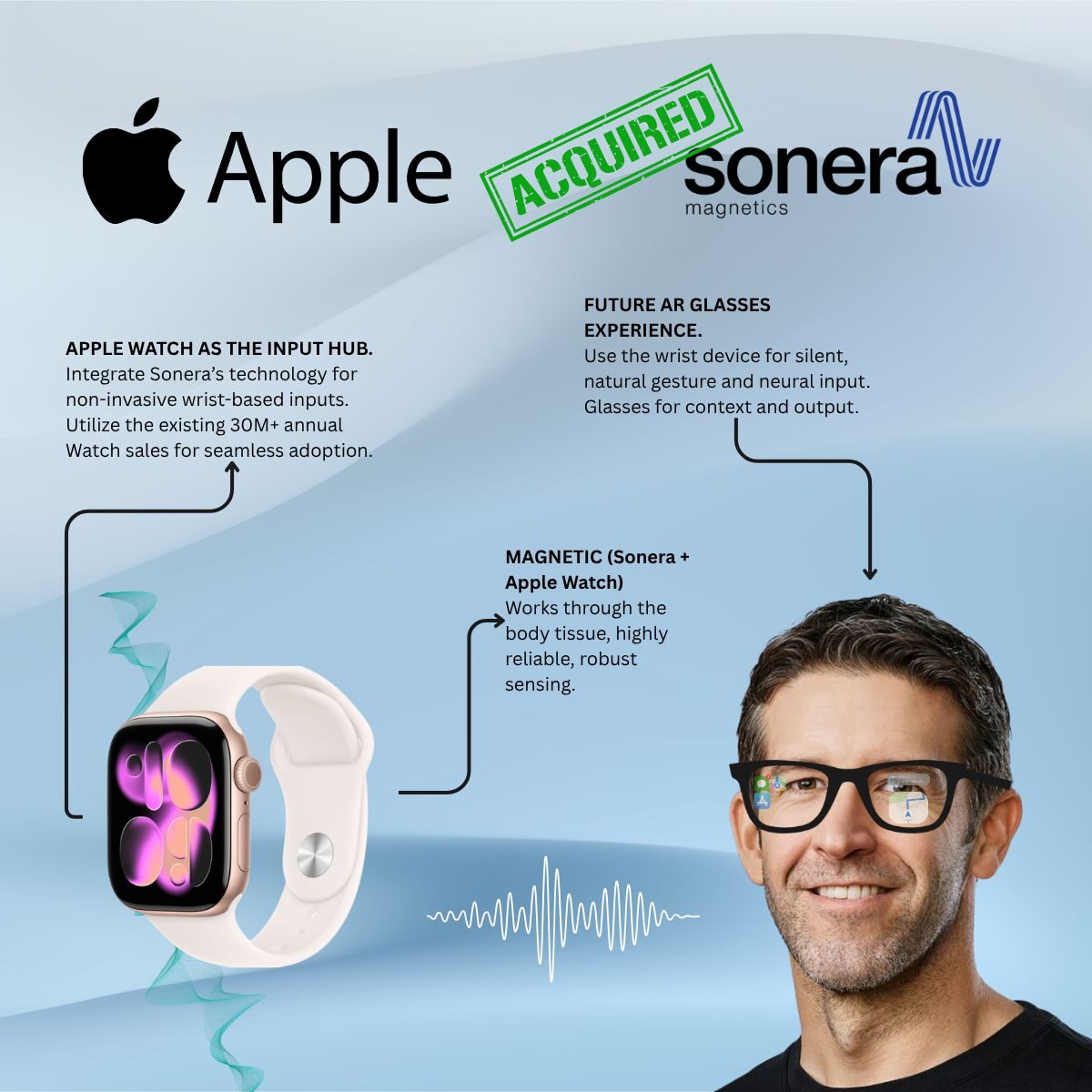
Apple just acquired Sonera: how it plans to beat Meta in the AR glasses war
Apple bought magnetic-sensor company Sonera. Here is why silent wrist input, not displays, will decide the AR glasses war, and what it means for reading.
Read the article →